Omaha, NE · Garage Door Service
Midtown Omaha sits 4 miles east of the city center with housing mostly built between 1960 and 2003. We know the doors and openers that era put on these garages.
Midtown sits about 4 miles east of the Omaha center, tucked between Benson to the northwest and Gifford Park a mile or so east. Downtown is roughly 6 miles further east, and Northeast Omaha and North Central Omaha sit a few miles north. That puts Midtown in the older ring of the metro rather than the newer subdivisions further out toward Millard or Gretna.
We don't have street names or landmark lists for this stretch of Midtown, and we're not going to guess at them. What we do know comes from housing-age data for the wider service area, and Midtown falls inside that same window. If you're calling us about a door here, chances are good it was installed by a builder working sometime in the last four decades of the 20th century, not last year.
That matters more than it sounds like it should. A door and opener installed in 1985 uses different mounting hardware, different spring counts, and often a different track profile than something put in during a 2010s remodel. Knowing the era before we show up saves a truck trip back for the right part.
Across this part of the metro, most housing went up between 1960 and 2003, with the median landing around 1982. That's the range that put a huge number of one-car and two-car garage doors on torsion springs sized for mid-century construction, later joined by a wave of 1980s and 90s builds using the chain-drive openers that were standard at the time.
What that means on a service call: doors from the earlier end of that window sometimes still have their original spring setup, which is decades past its cycle life even if it hasn't failed yet. Doors from the 80s and 90s wave usually still have their first opener, and those units are well beyond the point where parts are easy to source. When one of those motors finally quits, replacement is almost always cheaper than trying to find a matching gear kit.
We can't tell you which exact decade your house falls in without seeing the door, but the odds favor something in that 1960-2003 range rather than new construction. That's the honest starting point for any quote we give in Midtown.
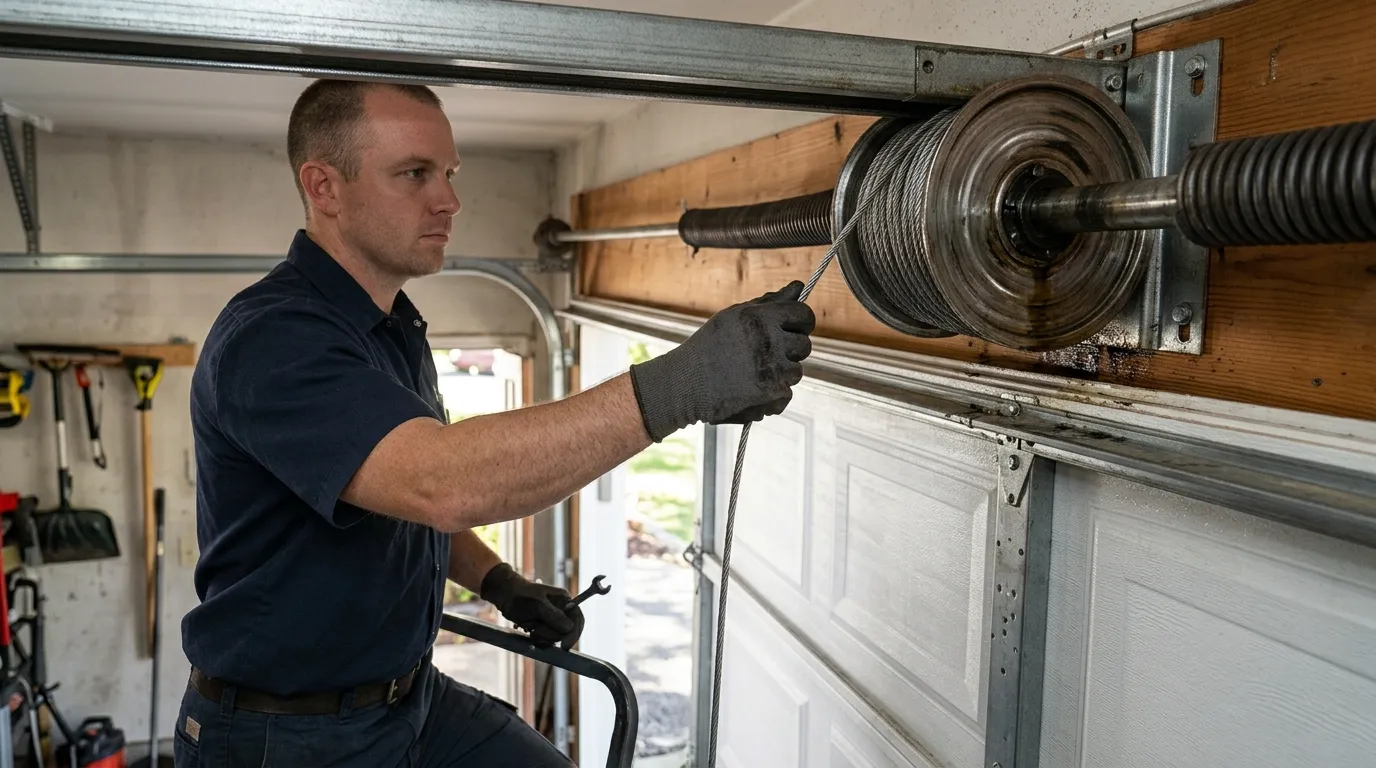
This is a cold-climate service area, and that's not a marketing line - it shapes what actually breaks. Steel contracts in low temperatures, and torsion springs that were already fatigued from age tend to snap on the first hard cold snap of the season rather than gradually. If your door is from that 1960-2003 building wave and it's never had the spring replaced, cold weather is when you'll find out.
Here's the limitation: we don't do custom architectural doors or specialty glass-panel installs. If that's what you're after, we're not the right call. What we do well is diagnosing and fixing the standard steel and wood-composite doors that make up the bulk of housing stock in this part of Omaha, and replacing openers that are past their reasonable service life.
We also won't tell you a repair makes sense when it doesn't. On an opener from the 80s or 90s, once the circuit board or gear set goes, we'll usually recommend replacement over chasing discontinued parts. That's not us pushing a bigger job - it's what actually costs less over time.
The calls we get from this part of Midtown follow a pattern tied to the housing age. Torsion springs on doors installed decades ago, snapping without warning, usually in cold weather. Chain-drive openers from the 1980s and 90s losing power to the trolley or failing to reverse properly, which on an older unit is a safety issue, not just an inconvenience.
We also see worn rollers and bent track on doors that have been cycling for thirty-plus years without ever being serviced, plus the occasional cable that's frayed through from age rather than misuse. None of this is exotic. It's what happens to garage hardware installed in the median year of 1982, give or take, sitting through decades of Nebraska winters.
What we don't see as often here: brand-new smart openers or high-end insulated doors, simply because the housing stock skews older. If you've got one of those, the job looks different, and we'll say so upfront rather than quoting it like a standard call.
We don't have exact records for individual houses, but the wider area's housing stock was built mostly between 1960 and 2003, with the median around 1982. That puts a lot of doors and openers here well into their second or third decade of service.
Torsion springs weaken gradually with every cycle, and steel gets more brittle as temperatures drop. A spring that was already near the end of its life often lets go on the first hard cold stretch rather than failing gradually, which is common in a cold-climate service area like this one.
No. We work on standard steel and wood-composite doors, which cover most of the housing stock in this part of Omaha. If you're after a custom architectural door, we're not the right shop for that job.
Usually not once the circuit board or gear set fails. Parts for openers that old are hard to source, and a new opener typically costs less than chasing down discontinued components. We'll tell you straight if your unit is past the point of a sensible repair.
Call now or request a free quote - same-day service on most repairs, upfront written pricing.