Omaha, NE · Garage Door Service
Garage door repair for Florence, Omaha, sitting about 7 miles northeast of downtown, built out mostly in the 1980s and 90s housing wave with original hardware still common.
Florence sits roughly seven miles northeast of downtown Omaha, one of thirteen named areas we work across in this part of the metro, alongside spots like Benson, North Omaha, and Northeast Omaha that ring the same stretch of the city. It's close enough to the river-side older neighborhoods to share some of their bones, but a good chunk of what's out here went up later than the oldest Omaha stock. We don't have a landmark list for Florence and we're not going to pretend we do - what we can tell you about is the houses themselves, because that's what tells us what's behind your door when we get the call.
The area sits inside the same cold-climate band as the rest of the metro, which matters more for garage doors than people expect. A door and opener here work through real winter, not a mild one, and that shows up in what breaks and when.
Across the wider service area the housing stock runs from 1960 through 2003, with a median build year around 1982, and Florence falls inside that same window along with the other named areas in this part of Omaha. That means a lot of garage doors out here are original or one replacement removed from original - steel sectional doors from the 80s and 90s, torsion springs sized for the door weight of that era, openers that have been swapped once already but tracks and hardware that haven't.
We're not going to tell you Florence has a specific decade all its own, because we don't have that broken out from the rest of the area. What we do know is the general pattern: doors from this build era were not designed with today's insulation standards or opener safety features, and thirty-plus winters of expansion and contraction on steel track takes a toll whether the house is in Florence or three miles over. If your door is original to a house built in that window, the spring and cable are the parts most likely to be past their rated cycle count, not the panel itself.
Cold-climate winters are hard on garage door springs specifically - the metal gets brittle in low temperatures and a spring near the end of its cycle life is more likely to let go on a cold morning than a mild afternoon. That's a straight fact about the climate band this whole metro sits in, Florence included, and it's why a lot of our cold-weather calls are spring failures rather than opener failures.
Here's the limitation: we can't tell you your door's exact age or spec without seeing it. A house built in 1982 could have had the door replaced in 2005 or never touched since. We're not going to guess a number on the phone and we're not going to quote a repair before we've looked at the spring, the track, and the opener in person. If a door is far enough gone that patching it costs close to what a new one runs, we'll say so instead of stacking repairs on something that's not worth saving.
On housing stock from this era, the calls we get most are broken torsion springs, worn rollers rattling in the track, and openers that have started grinding or reversing on their own - all things that show up more as steel doors and 80s/90s hardware age past their expected cycle count. Cold mornings bring more spring snaps than any other single cause, which lines up with the climate this area sits in.
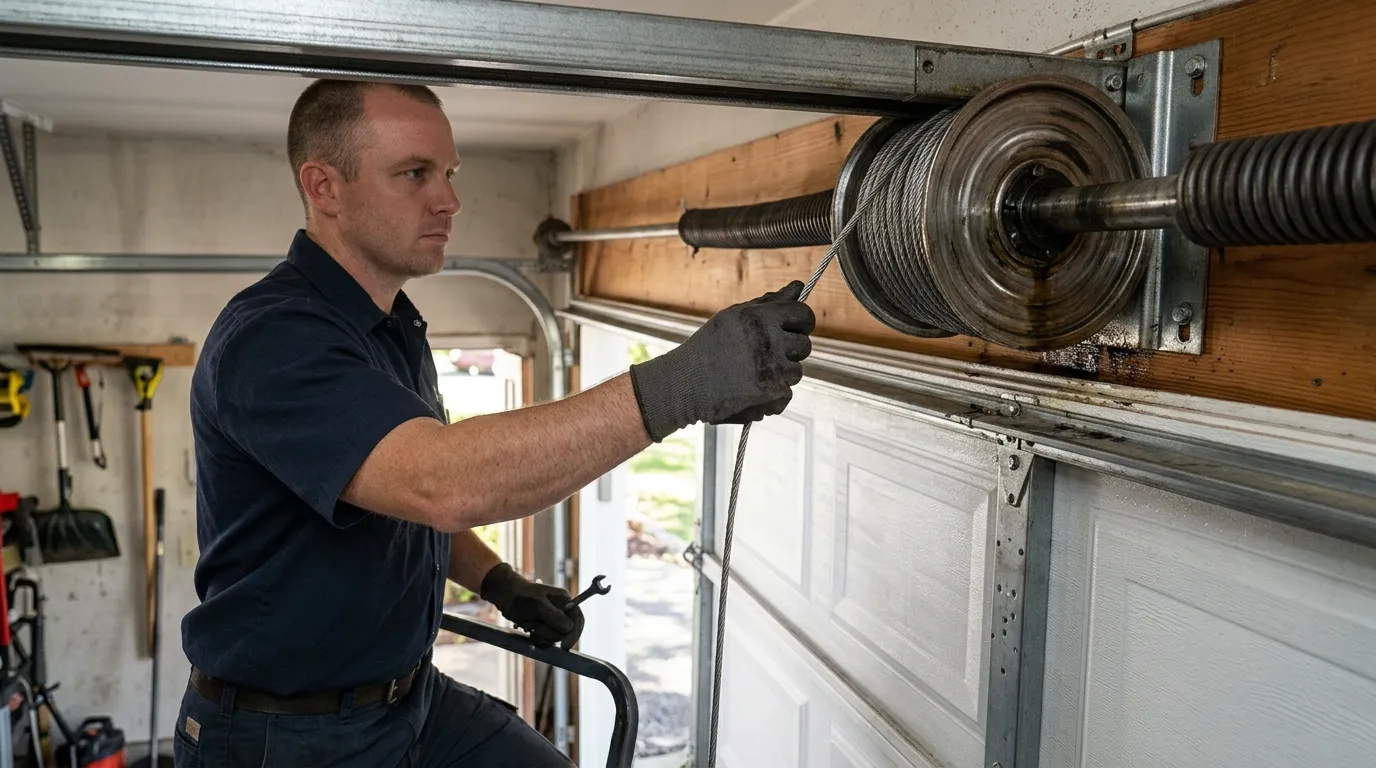
We also see cable fraying on the drums, especially on doors that haven't had the hardware serviced since it went in, and panel dents from the usual driveway mishaps that happen in any neighborhood with two-car households. We don't do new construction installs or commercial doors - if that's what you need, we'll tell you upfront rather than take the job and figure it out.
Not without seeing the door. We know the broader area's housing was mostly built between 1960 and 2003, with a lot of it from the 1980s and 90s, but Florence itself isn't broken out separately in what we have. A quick look at the door tells us more than a build year would.
Cold makes spring steel more brittle, and this area sits in a climate band with real winters, not mild ones. A torsion spring near the end of its cycle life is far more likely to snap on a cold morning than in warmer weather, which is why we see a jump in spring calls once temperatures drop.
Depends what's wrong. A worn spring or a bad roller on an otherwise sound steel door is usually worth fixing. If the track is bent, the panels are rusted through, or repairs would stack up close to replacement cost, we'll tell you that instead of billing you for a patch job.
No, that's outside what we handle. We work on repair and replacement for existing houses, not new-build installs or commercial doors. If that's what you're after, we'll say so rather than take the job.
Call now or request a free quote - same-day service on most repairs, upfront written pricing.