Omaha, NE · Garage Door Service
Chalco homes mostly went up after 1985, later than most of Omaha's stock. That later build year changes which springs and openers fail first. We drive out from Omaha for the job.
Chalco sits about 7 miles from our Omaha shop, and the calls we get from out here skew a little different than the older parts of the city. Because most houses went up after the mid-1980s, you're less likely to have the ancient wood-panel doors we see closer to town and more likely to have steel sectional doors on extension or torsion springs from the original builder-grade install. The most common calls: an opener from that era finally giving out after years of use, a torsion spring that's reached the end of its cycle count, or a bottom bracket that's rusted through after a couple decades of Nebraska winters. We also hear from folks whose door still works but bangs and shudders on the way up - usually worn rollers or a track that's shifted slightly out of plumb over the years. None of this is exotic. It's what happens to a door built in the late '80s that's finally hit thirty-plus years of daily use.
The typical home in Chalco was built around 1989, which puts it noticeably later than a lot of the Omaha housing stock, where the citywide median build year runs closer to 1982. That decade matters more than it sounds like it should. A house from the late '80s came with a garage built to hold a steel sectional door on standard torsion hardware, not the older single-panel or wood-slab doors you find in Omaha's pre-1970 neighborhoods. With roughly 4,359 households in this area and a median household income of $81,427, this reads as a fairly stable, established suburban pocket - not new construction, but not the oldest stock in the metro either. Most of these garages have never been touched since the original install, which means original springs, original openers, and original weatherstripping are all still doing their best on borrowed time.
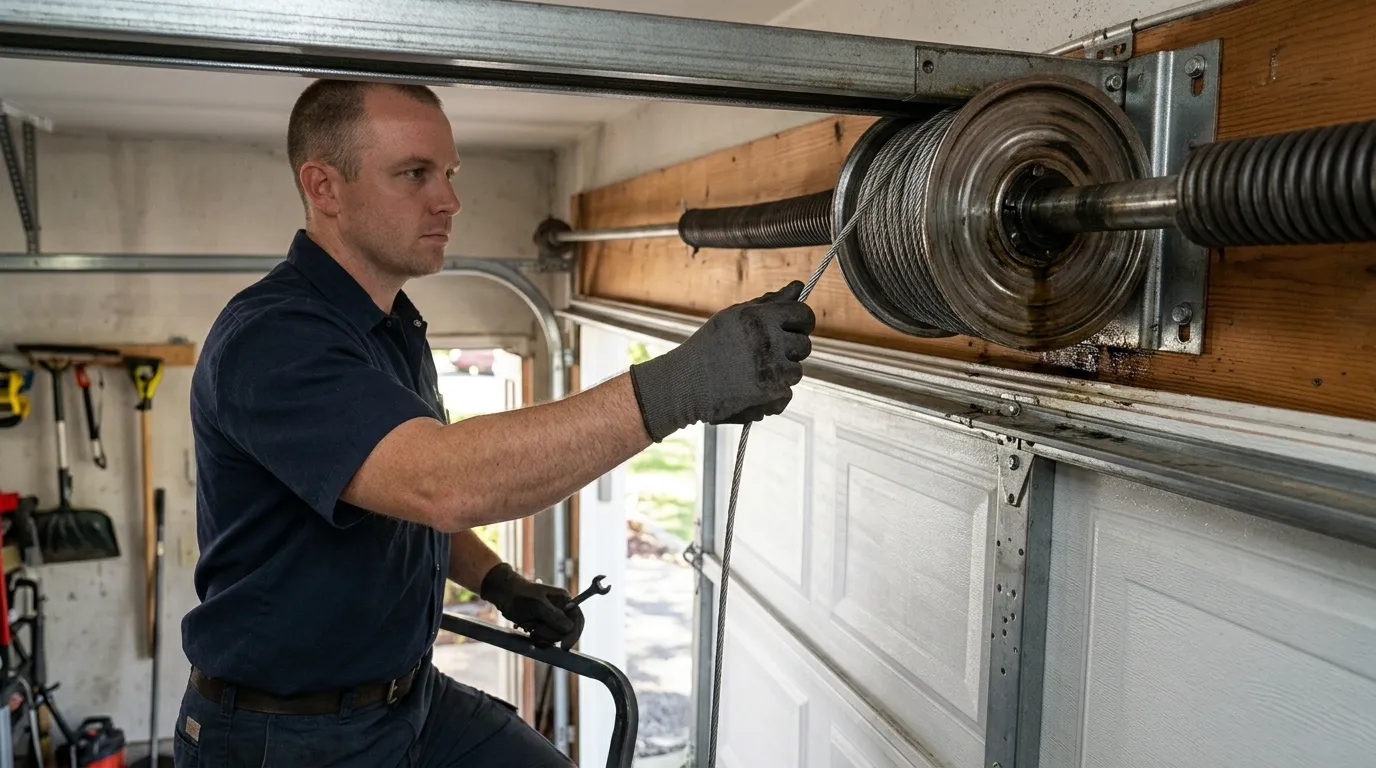
A door from a late-'80s build usually has torsion springs rated for a certain number of open-close cycles, and after 30-plus years most of those springs are past due, whether they've snapped yet or not. We also see openers from that era - chain-drive units that have simply worn out their gears or capacitors. The good news is that late-'80s garages were built to a fairly standard set of dimensions and hardware, so parts are usually easier to source than on the odd sizes you find in older housing. The bad news is Nebraska's cold winters. This area sits in a severe cold climate zone, and steel doors from this period often have thin or missing insulation, which means metal contracts hard in a hard freeze - that's when a marginal spring or a stiff track finally gives out. If your door is original to a house built around 1989, it's worth having someone look at the spring and cable condition before it fails on a January morning.
We travel out to Chalco from our shop in Omaha - we don't keep a truck stationed here, so we're not the outfit to call for a same-hour walk-in. We also don't try to rebuild a door that's more trouble than it's worth. If your springs, opener, and track are all failing around the same time, which happens on doors from this build era, replacing the door is usually the better spend than patching each part as it dies. We won't push a full replacement on a door that just needs one repair, but we'll tell you straight when the parts add up to more than a new door would cost.
If your house dates to around 1989 like most of this area, your opener is likely original - chain-drive units from that era typically last 15-20 years of daily use. Gears wear out, capacitors weaken, and logic boards fail from age rather than any single cause. When the opener starts slipping or reversing randomly, it's usually cheaper to replace than repair.
Generally, yes. This area's housing runs later, with a median build year around 1989, versus a citywide median closer to 1982. That means steel sectional doors on standard torsion hardware are far more common here than the older wood-panel or single-slab doors found in Omaha's oldest blocks.
This area sits in a climate zone federal data classifies as severe cold, and steel doors from the late 1980s often have thin insulation. Metal contracts in hard freezes, which puts extra strain on springs and tracks that are already decades old. That's often when a marginal part finally fails.
No. We run out of our Omaha shop, about 7 miles away, and drive out for jobs here. We don't advertise a local depot or a guaranteed response window in this area - just straight answers about what your door needs.
Call now or request a free quote - same-day service on most repairs, upfront written pricing.