Omaha, NE · Garage Door Service
Chalco homes built around 1989 run original steel rollers that dry out in cold winters. We replace worn rollers on double and single doors, out from Omaha.
Chalco is a smaller piece of the metro - about 4,359 households, most of them in houses built around 1989, a good decade after the older stock you find closer to Omaha's core. That build era matters for rollers. Doors that went up in the late 1980s and into the 90s across this part of the service area mostly still run steel or early nylon rollers on stamped-steel tracks, and thirty-plus years of use is enough to wear the axle stubs down to nothing. Add in the cold - this whole area sits in a severe cold climate band - and grease inside the roller bearing gets thick and grit-packed every winter, then thaws and refreezes every spring. That cycle is what actually kills a roller, more than the door opening and closing itself. You'll see it worst on the bottom two rollers, the ones that ride the curved part of the track and take the most side load when a door that's a little out of square gets forced through the bend. A roller that's cracked or flat-spotted there will grind before it seizes.
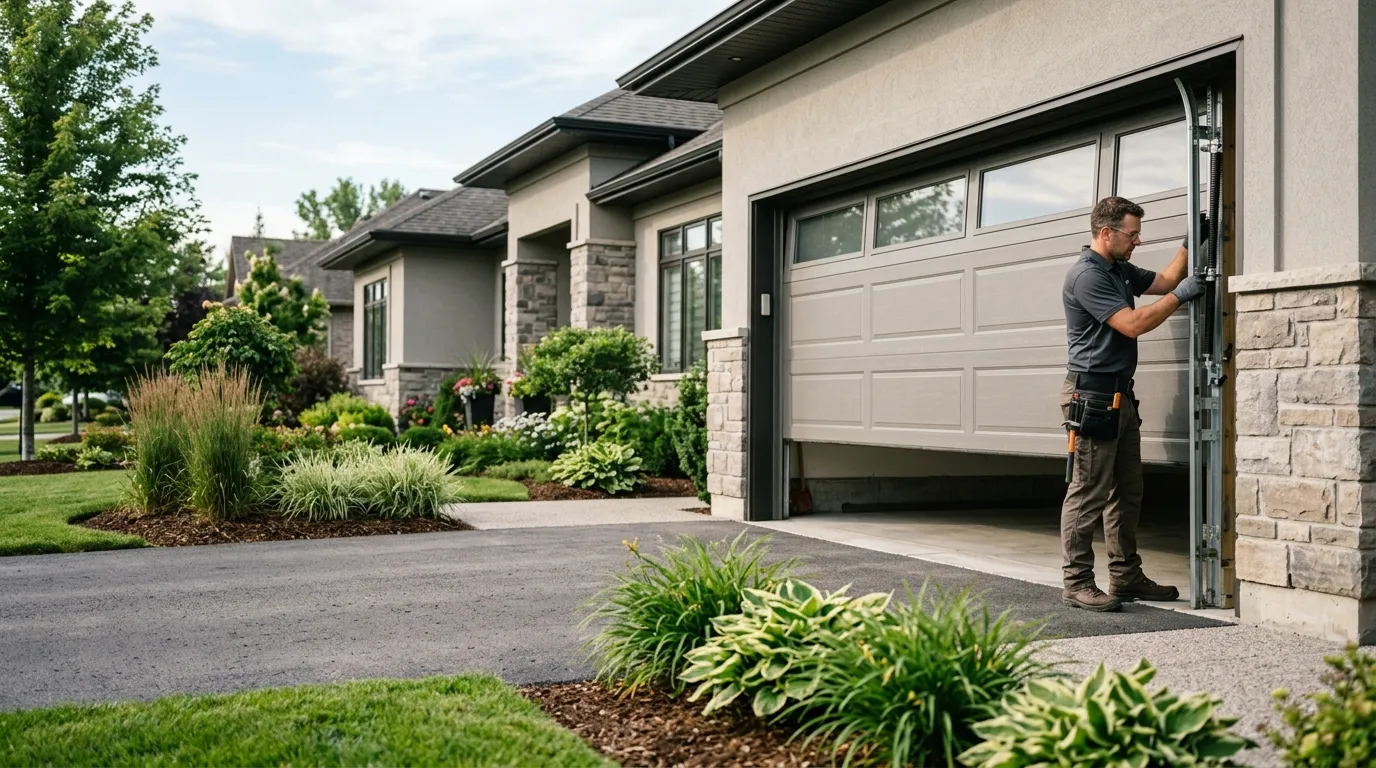
A roller swap is not a day the door sits open. Once we're on site, pulling and replacing rollers on one side of a door is a matter of working the hinges loose, sliding the old roller stem out, and setting new ones in - the door itself stays on the track the whole time, just resting on a jack while we work each stem. Even a full set on a double-wide, ten rollers, both sides, top to bottom, is close work rather than long work. What takes the time is diagnosis if the track is also bent, which happens more than people expect on the older 1980s-era doors around Chalco where track brackets have loosened over three decades. We're coming from Omaha, about 7 miles out, so factor that drive into your morning rather than into the repair itself. The honest limit here: if the roller failure has already bent the track or cracked a panel where the roller rode, that's a second problem, and we'll tell you before we start rather than surprise you on the invoice.
We don't have a set number to hand you here, because roller cost swings on things we can't know until we're at the door: how many rollers are actually bad, whether you want steel or sealed nylon, and whether the track needs straightening along with it. What we can tell you is the shape of the decision. Nylon rollers with sealed ball bearings cost more per roller than open steel ones but run quieter and don't need the periodic lube that steel rollers do - worth considering given how many Chalco garages still have the original steel wheels from construction. If only one or two rollers on a ten-roller double door have failed, replacing the whole set at once usually costs less in labor overall than coming back twice. We'll give you the actual number after we've looked at the door, not before.
Call or use the area page for Chalco to get in touch, and describe what you're hearing or seeing - grinding, a roller that's visibly split, a door that jumps at one spot in the track. That tells us whether to bring a full roller set or plan on inspecting the track too. Chalco service area page. If you're comparing roller work against other repairs first, the main roller replacement page for the metro covers what the job involves more broadly: garage door roller replacement, Omaha.
The complaint we hear most is a grinding or popping sound right at one spot in the door's travel, not the whole way up or down. That's a flat-spotted or cracked roller catching on the same point in the track every cycle. Some owners describe a jump or a hop instead of a smooth roll, especially on the curved section near the top of the door. On the older doors common through Chalco's 1980s-built neighborhoods, you'll sometimes see the roller stem has worn an oval hole in the hinge bracket rather than the roller itself failing outright - a sign the whole roller-and-bracket assembly is past due. A door that's suddenly loud only in cold weather and quiet again once it warms up is telling you the grease in the roller bearings has stiffened, which is common given the severe winters here and is often solved with sealed rollers instead of open ones.
We pull the door section by section rather than dropping the whole door off track: jack the panel, release the roller from the hinge, swap it, and move to the next. On doors with steel rollers original to the 1980s build era, we'll usually recommend stepping up to nylon while we're in there, since it's the same labor either way and the nylon won't need the periodic lube steel does. If the track has worn oval where a roller stem rode, we straighten or replace that section rather than just seating a new roller into a bad track - a new roller in a worn track fails again fast. What we don't do is replace an entire track system on a roller call unless it's actually bent or rusted through; most of the time on doors this age the track is fine and only the rollers and maybe a bracket need attention.
If your door is original to the 1980s build era common in Chalco, we usually suggest the full set rather than just the failed ones. The rest are the same age and wearing the same way, and doing them together in one visit costs less in labor than two separate calls a year apart.
Only if it's actually bent, rusted through, or worn oval where a roller stem rode. Most Chalco garages built around 1989 still have sound tracks even when the rollers are done. We check it every time, but we don't swap a good track just because we're already there.
Grease inside older steel rollers thickens and gets grit-packed in a severe cold climate like ours, then freezes and thaws through the winter. That stiffness is what causes the grinding, and it usually clears up once you switch to sealed nylon rollers, which don't need the same lube.
Call now or request a free quote - same-day service on most repairs, upfront written pricing.